Bakery Recipe Costing Calculator: Know Your True Margins
Stop guessing recipe costs. BakeOnyx's Recipe Costing feature calculates the exact ingredient cost and margin of every recipe down to the gram—and updates automatically when prices change.
Quick answer
BakeOnyx Recipe Costing calculates the exact ingredient cost and profit margin of every recipe down to the gram, then automatically updates when ingredient prices change—so you can reprice with confidence and stop losing money on bestsellers.
Bakery Recipe Costing Calculator: Know Your True Margins
The Hidden Cost Problem Most Bakeries Face
You've built a loyal customer base. Your chocolate croissants sell out. Your sourdough has a waiting list. But here's the uncomfortable question: are you actually making money on them?
Most bakery owners price recipes the way they price everything else—by feel, by what competitors charge, or by a rough markup they set years ago. The problem is ingredient costs don't stay still. Flour prices spike. Butter fluctuates. Chocolate follows commodity markets. When you're manually tracking dozens of recipes across spreadsheets, the math gets stale fast.
Without accurate recipe costing, you're flying blind:
- You might be losing money on bestsellers. A popular item with thin margins can drain profitability while you think it's a win.
- Price increases hit you late. By the time you realize flour costs 15% more, you've already baked 200 loaves at the old margin.
- Spreadsheets become outdated instantly. You update ingredient costs on Monday; by Friday, half the numbers are wrong.
- Repricing decisions are guesswork. You don't know whether to raise that $6 cake to $6.50 or $7.00 to protect your margin.
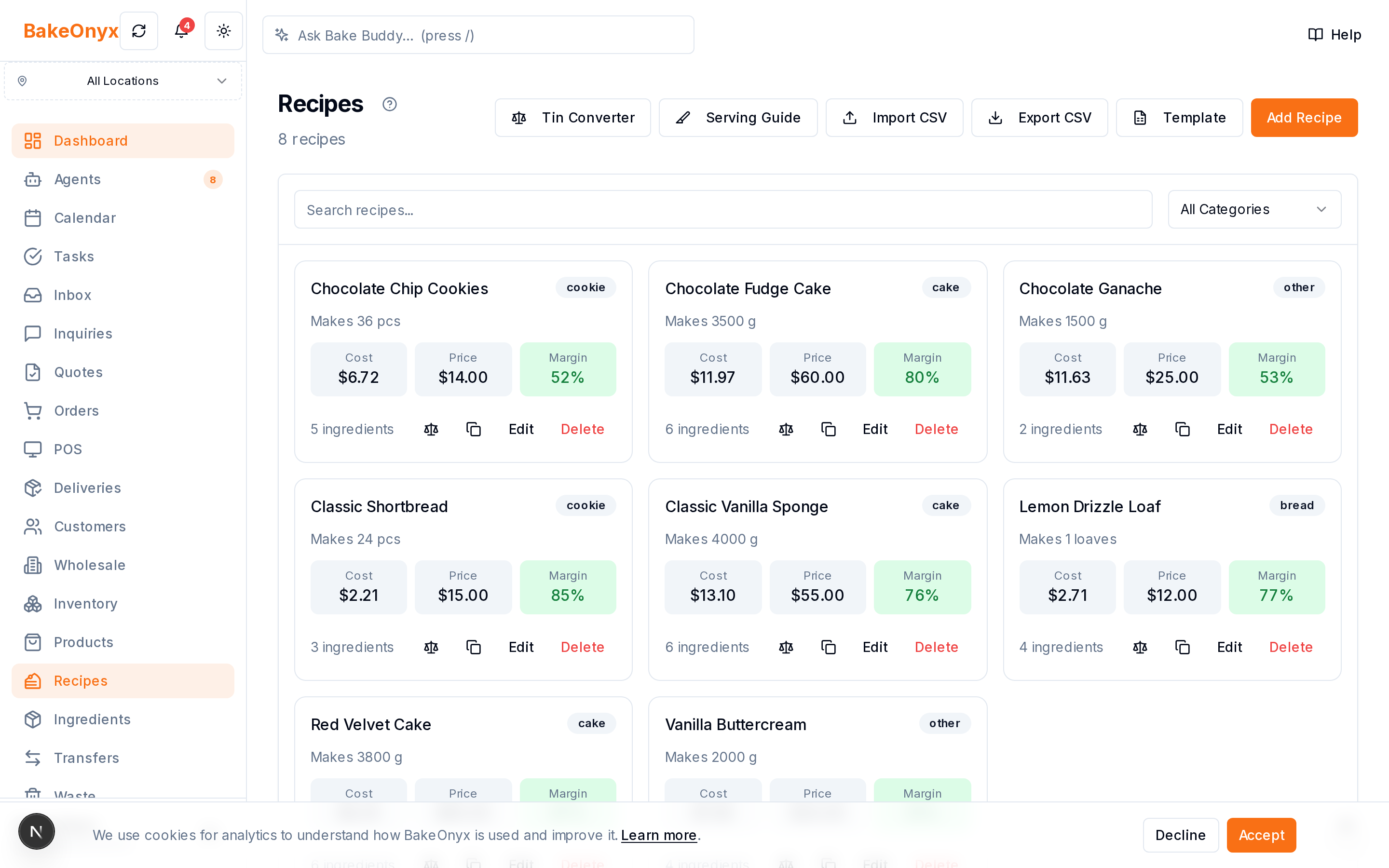
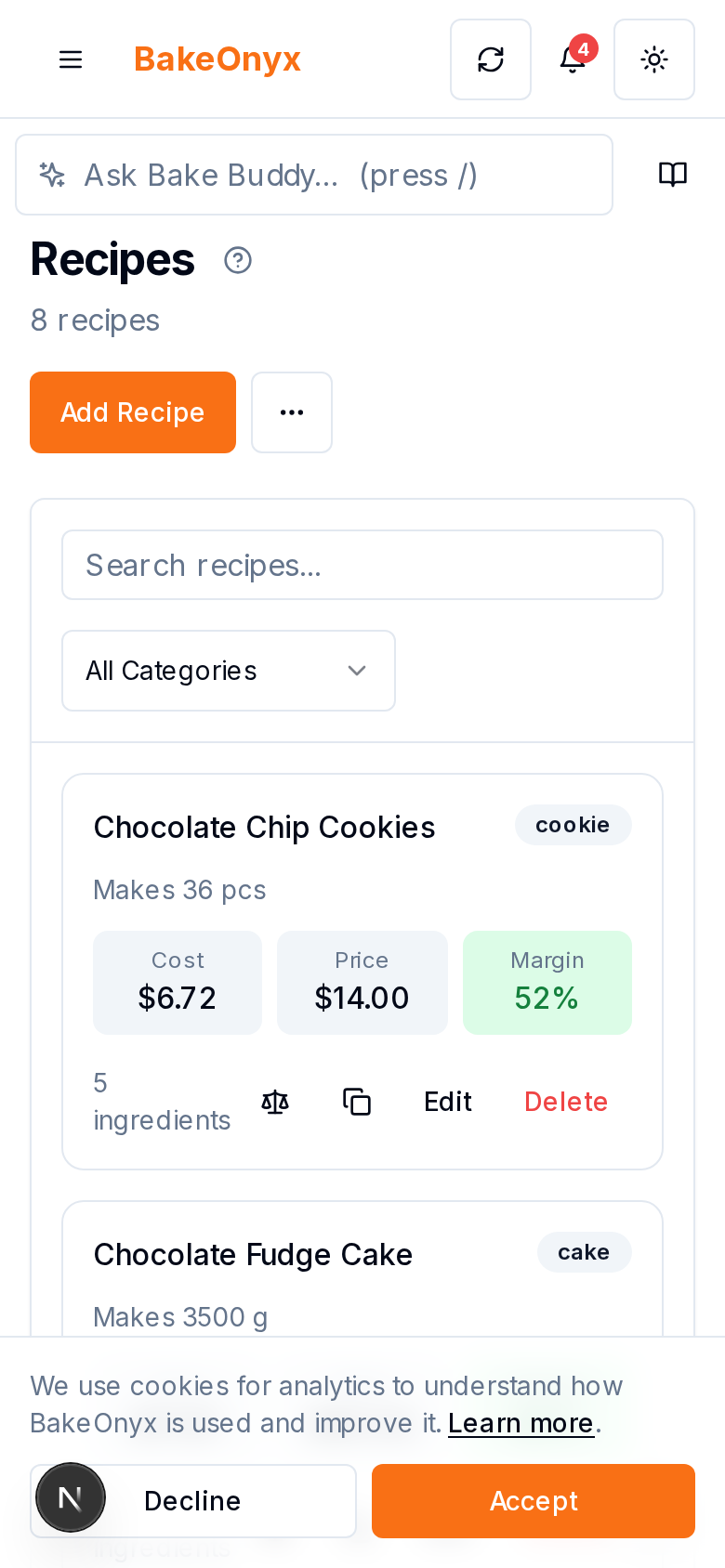
BakeOnyx's Recipe Costing feature solves this by calculating the exact cost and margin of every recipe down to the gram, and updating it the moment ingredient prices change.
How Recipe Costing Works in BakeOnyx
Step 1: Input Your Ingredient Inventory with Current Costs
Start by entering your ingredients into BakeOnyx with their current cost per unit (per pound, per ounce, per liter—whatever makes sense for that ingredient). This becomes your ingredient cost database. You only need to do this once; BakeOnyx stores it centrally.
Step 2: Build Your Recipe with Exact Gram Weights
Create a recipe by adding ingredients and their gram amounts. BakeOnyx calculates the cost of each ingredient based on its current price in your inventory. A recipe for a chocolate chip cookie that calls for 150g of flour, 100g of butter, and 75g of chocolate automatically costs out to the exact total ingredient expense—no rounding, no guessing.
Step 3: Set Your Target Margin and See the Price
Tell BakeOnyx what margin you want (e.g., 60% markup or 40% food cost). The feature instantly shows you what price you need to charge to hit that margin. You can also enter a price you want to charge and see what margin you'd actually make.
Step 4: Update Ingredient Costs and Watch Recipes Recalculate
When you buy flour from a new supplier or prices shift, update the cost in your ingredient inventory. Every recipe using that ingredient automatically recalculates its cost and margin. No manual updates. No stale spreadsheets. You see in real time how a 10% butter price increase affects your croissant margin.
Step 5: Reprice with Confidence
Based on the updated costing, you decide whether to adjust your recipe prices. BakeOnyx shows you the data; you make the business call. Some bakeries hold margins steady and absorb small cost moves. Others reprice immediately. Either way, you're making the choice from a position of knowledge, not guesswork.
Why This Matters for Your Bottom Line
Recipe costing isn't just about knowing numbers—it's about protecting profit.
When you know that your signature sourdough actually costs $1.20 in ingredients and you're selling it for $5, you see a healthy 75% margin. But if flour costs spike 20%, that margin drops to 70%—still good, but now you have data to decide whether to adjust. Without Recipe Costing, you might not notice for weeks.
For items with tighter margins, the impact is even sharper. A Danish pastry with a 40% food cost target needs precise costing to stay profitable. A single untracked cost change can flip it into a loss.
Recipe Costing also ends the spreadsheet trap. No more exporting ingredient lists to Excel, manually calculating ingredient costs, then forgetting to update when prices change. Everything lives in one place and updates automatically.
Who Needs This Feature Most
If you're:
- Running multiple recipes and unsure which are actually profitable
- Sourcing from suppliers with fluctuating prices
- Repricing manually and want to base decisions on data
- Spending hours in spreadsheets to track recipe costs
- Scaling and need a system that grows with you
…Recipe Costing will save you time and money.
Start Costing Your Recipes Accurately
Guessing recipe costs is expensive. BakeOnyx's Recipe Costing feature gives you the exact numbers you need to price confidently and respond instantly when ingredient costs change.
Ready to see your real margins? Start a free trial of BakeOnyx today and set up your first recipe in minutes.
The summary, FAQ, and statistics in this section were compiled from public sources and reviewed by the BakeOnyx editorial team. AI-assisted research.
Frequently Asked Questions
How does BakeOnyx calculate recipe costs?▾
You input your ingredients with their current cost per unit, then build recipes by adding ingredients and their gram weights. BakeOnyx multiplies the gram amount by the ingredient's cost to calculate the total recipe cost automatically. When ingredient prices change, all recipes using that ingredient recalculate instantly.
What happens if I change an ingredient price?▾
Every recipe containing that ingredient automatically recalculates its new cost and margin. You see in real time how the price change affects each recipe, so you can decide whether to adjust your selling price or absorb the cost difference.
Can I use Recipe Costing to set prices?▾
Yes. You can set a target margin (e.g., 60% markup) and BakeOnyx tells you what price to charge. Or enter a price you want to charge and see what margin you'd actually make. This takes the guesswork out of repricing.
Does Recipe Costing work for recipes with multiple batch sizes?▾
Recipe Costing calculates cost based on the gram weights you input. You can create separate recipes for different batch sizes, or use the same recipe and scale the ingredient amounts—BakeOnyx will recalculate the total cost and margin accordingly.
How often should I update ingredient costs?▾
Update costs whenever your supplier prices change or you switch suppliers. Since BakeOnyx recalculates all affected recipes instantly, you'll always see accurate margins. How often you update depends on your suppliers and market volatility.
BakeOnyx Team
Contributing writer at BakeOnyx. Covering bakery business management, recipe costing, and baking industry trends.
Related Posts
Bakery Product and Price Management: Keep Costs Honest
Stop managing prices across spreadsheets and memory. BakeOnyx's Products & Pricing feature links your full product list, variants, and prices to recipes so you always know your true costs.
Bakery Waste Tracking: See Where Margin Leaks & Fix It
BakeOnyx Waste Tracking logs every ingredient loss so you can identify where profit is disappearing and cut food costs with real data, not guesswork.
Bakery Sales and Profit Reports: See Your Real Numbers
Stop guessing which products make money. BakeOnyx Reports & Analytics shows your best sellers, busiest days, and real margins at a glance—so you can make decisions backed by data, not intuition.
Related Product Guides
Explore Related Features
Ready to get your time back?
Join hundreds of baking businesses using BakeOnyx to manage orders, recipes, and inventory.
Start Your Free Trial