Bakery Ingredient Lot Tracking: Find Recalls in Minutes, Not Hours
BakeOnyx's Lot Tracking & Recalls feature lets you trace every ingredient by lot number, so when a supplier recall happens, you know exactly which bakes were affected—instantly.
Quick answer
BakeOnyx's Lot Tracking & Recalls feature connects every ingredient lot to every bake, so when a supplier issues a recall, you instantly know which products were affected—eliminating hours of manual searching and compliance risk.
Bakery Ingredient Lot Tracking: Find Recalls in Minutes, Not Hours
The Problem: Recalls Without a Paper Trail
Your phone rings. It's your flour supplier. A recall has been issued on a specific lot of their product due to a contamination concern. Your stomach drops.
You hang up and start digging through invoices, production logs, and memory. Which batches used that flour? When were they baked? Who bought them? If any of those products are still on shelves or in customer hands, you need to know now—but instead, you're spending hours reconstructing your records.
This is the reality for bakeries without ingredient lot tracking. A recall that should take minutes to manage turns into a crisis of uncertainty. You're scrambling to piece together which bakes used which ingredients, compliance auditors are watching closely, and your customers are left wondering if their purchases are safe.
BakeOnyx's Lot Tracking & Recalls feature eliminates this chaos by connecting every ingredient to every bake through lot numbers. When a recall happens, you don't panic—you pull up the data.
Why Lot Tracking Matters for Your Bakery
Ingredient lot numbers are your audit trail. Every bag of flour, every container of eggs, every shipment of chocolate has a unique lot identifier. If you're tracking those lot numbers through your production process, you can answer the critical question in seconds: Which of my products contain this ingredient?
Without lot tracking, you're guessing. With it, you're compliant, confident, and fast.
Beyond recalls, lot tracking also helps you:
- Spot quality patterns. If customers report issues with a specific batch, you can trace it back to the exact ingredient lot and supplier shipment.
- Manage expiration dates. Lot numbers are tied to shelf life, so you can track when ingredients expire and rotate stock accordingly.
- Support audits. Health inspectors and compliance reviewers want to see traceability. Lot tracking gives you the documentation they're looking for.
How It Works
Step 1: Log Ingredient Lots When You Receive Shipments
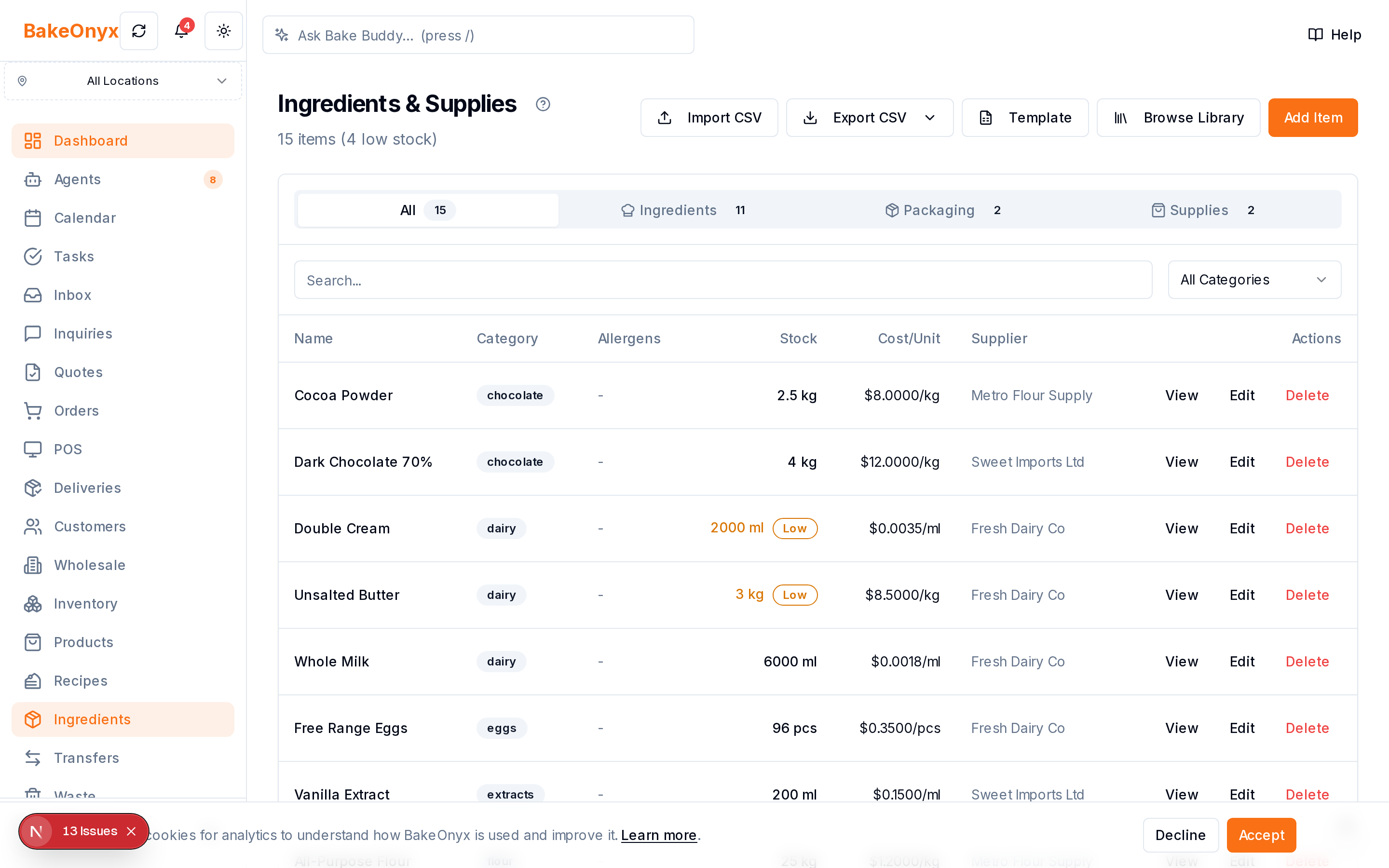
When a new ingredient shipment arrives at your bakery, you enter it into BakeOnyx just as you would in any inventory system—but you also capture the lot number from the supplier's label. This creates a permanent record linking that specific bag, container, or batch to its lot identifier and supplier.
Step 2: Assign Lots to Production Recipes
When your bakers prepare a recipe, BakeOnyx prompts them to select which ingredient lot they're using. This happens naturally during production scheduling—it's not an extra step, it's part of how the system works. Each bake is now tagged with the specific lot numbers of its ingredients.
Step 3: Track Bakes Through Sales and Distribution
As baked goods move from oven to shelf to customer, BakeOnyx maintains the connection. Every product that left your bakery carries a record of which ingredient lots went into it. That finished loaf of sourdough? BakeOnyx knows it contains flour lot #FL-2024-0847 and yeast lot #YST-2024-1203.
Step 4: Respond to a Recall in Minutes
When a supplier calls with a recall, you don't start digging. You open BakeOnyx, enter the lot number, and the system instantly shows you:
- Which recipes used that ingredient lot
- Which baked products were made with that lot
- When those products were baked
- Where they were distributed (wholesale, retail, direct sales)
- How many units are affected
Instead of hours of manual searching, you have a complete picture in minutes. You can notify affected customers, pull products from shelves, and report to regulators with confidence.
Real-World Impact
Consider a typical scenario: A bakery uses 50 pounds of almond flour per week from three different suppliers. Without lot tracking, a recall on one supplier's lot means checking dozens of production records by hand, calling staff to remember which bag was used when, and hoping you don't miss anything.
With BakeOnyx's Lot Tracking & Recalls, you run a report. The system tells you that almond flour lot #ALM-2024-0512 was used in three batches of croissants on March 15th, which were sold to two wholesale accounts and your retail location. You have names, dates, and quantities. You act.
Compliance and Peace of Mind
Food safety regulations expect traceability. Health departments, insurance auditors, and customers all want to know that if something goes wrong, you can prove what happened and when. Lot tracking isn't optional—it's a best practice that protects your business.
BakeOnyx's Lot Tracking & Recalls feature builds this protection into your daily workflow. You're not doing extra compliance work; you're capturing the data you should be capturing anyway, and organizing it so it's useful when you need it.
Start Tracking Today
If a recall has ever caught you off guard, or if you've worried about your ability to respond quickly, lot tracking is the answer. BakeOnyx makes it simple to log, assign, and trace ingredient lots through every step of production.
Ready to see how it works in your bakery? Start a free trial of BakeOnyx and set up lot tracking for your next ingredient shipment. No credit card required.
BakeOnyx helps bakeries manage inventory, production, and compliance. Lot Tracking & Recalls is one of many features designed to save you time and protect your business.
The summary, FAQ, and statistics in this section were compiled from public sources and reviewed by the BakeOnyx editorial team. AI-assisted research.
Frequently Asked Questions
Do I have to manually enter lot numbers every time I bake?▾
No. You enter the lot number once when you receive an ingredient shipment. During production, BakeOnyx prompts you to select which lot you're using—it's a simple dropdown, not manual data entry. The system tracks the connection automatically from there.
What if I don't have lot numbers from my supplier?▾
Lot numbers come from your suppliers' labels and invoices. If a supplier doesn't provide them, ask—it's a standard practice in food production. BakeOnyx makes it easy to capture and store them, but the numbers themselves come from the source.
Can BakeOnyx help if a recall affects products already sold to customers?▾
Yes. Once you identify which products contain the recalled lot, BakeOnyx shows you which customers received them (if you track sales through the system). This helps you reach out quickly. The system gives you the data; you own the customer communication.
Does lot tracking help with anything besides recalls?▾
Absolutely. Lot tracking helps you spot quality patterns, manage ingredient expiration dates, rotate stock correctly, and pass health inspections. It's also useful if a customer reports an issue—you can trace the exact ingredient lot and investigate.
Is lot tracking required by law?▾
Food traceability is a best practice expected by regulators and insurance auditors. While requirements vary by location and product type, being able to trace ingredients is increasingly standard in the food industry and protects your business.
BakeOnyx Team
Contributing writer at BakeOnyx. Covering bakery business management, recipe costing, and baking industry trends.
Related Posts
Multi-Location Bakery Inventory Transfers: Keep Stock Accurate
Move stock between bakery locations with a complete audit trail. BakeOnyx Inventory Transfers eliminate guesswork and keep every site's counts accurate.
BakeOnyx Shopping List: From Orders to Exact Ingredients
Stop guessing what to buy. BakeOnyx's Shopping List turns your confirmed orders and production plan into a precise ingredient list—eliminating waste and forgotten trips.
Bakery Waste Tracking: See Where Margin Leaks & Fix It
BakeOnyx Waste Tracking logs every ingredient loss so you can identify where profit is disappearing and cut food costs with real data, not guesswork.
Related Product Guides
Explore Related Features
Ready to get your time back?
Join hundreds of baking businesses using BakeOnyx to manage orders, recipes, and inventory.
Start Your Free Trial